Final Blog Post

Wow! I cannot believe that this course is already over. I feel like have grown and learned so much throughout these past few weeks. There was so much content covered and self-growth as a teacher and student. One of my favorite things about this course was learning how to be a better student and teacher. The best teachers understand their student’s struggles, thought processes, and more. By participating in the different tasks like the daily creates, blogs, independent learning project, and more we can relate our experiences to our future students. Each post that I wrote there was great insight to the topic and just about every time I would relate the topic to my own personal life. I feel that people remember concepts or topics better if they also remember a story or personal experience with it.

I feel that all of my posts throughout the course have been pretty upbeat and positive. They reflect on the given topic, I expressed my personal feelings and opinions, talked about what I learned, and more. I remained respectful in my writing but also wrote how I felt. I have never been into blogging but I have always enjoyed writing and feel that I am good at it. With the weekly blog posts, whether about a specific topic or my independent learning project, I was able to have fun with it and make it my own. I also felt like my voice throughout all of the posts stayed the same and you could tell it was me the whole time. Throughout my blogs I felt like you could tell the topics that interested me more than the others and ones that I had strong opinions on. I was detailed about the different discussions and provided a lot of information. 

I honestly felt that all of the topics that I wrote about on my blog were very strong topics. They were interesting to me so that also made it easier to write them. I will definitely keep my blog, even if I do not write in it as much as I have been. A few topics that I really enjoyed writing and then revisiting were Teens and Social Media, Children and Technology, and Adolescents in the Digital Age. I found all of these topics very interesting and beneficial to me as a future educator. Technology has made a rise in the last decade and will continue to. As a teacher I need to be aware of all the technical advances and use them as tools in my teaching. Technology, social media, and the internet are all things that we cannot avoid so it is best that we learn how to utilize them in a positive way. Technology is also something that is only going to increase, not decrease. More than likely we will use technology even more in the future so we always need to stay caught up on the new tools.

Although there were some interesting blogs I wrote, there were also some that I know will be helpful to me in the future as a teacher. For example, the blog on utilizing TED talks is something I know I will refer back to in the future. TED talks are such a great resource but we also need to know how to use them correctly. Another one I know I will look back on regularly is the one on personal learning network. This is a strategy that I need to continue doing, working on, and growing throughout my whole career. I didn’t even know this was really a thing until the assignment. It is important and my blog really helps me understand it better and remember the information I need to know. Lastly, I really enjoyed learning about the importance of digital citizenship and digital activism. With as much technology as we use daily, these are two concepts that we need to be familiar with and teach our students. They are also both things that we need to model for our students.

As important as education is, it is essential that everyone, especially teachers, realize that teaching things like math, reading, writing, and other subjects is not the single most important thing. Many years of schooling is not for everybody, and oftentimes people learn the same thing outside of school that they could learn in school. We should encourage kids to choose a path that is right for them and not do something because they think that is what they should do or is expected of them. There are many people that feel they are not prepared for society like they want to be after they graduate high school or even college. It is also important to keep in mind that kids do a lot of learning on their own. The experiences they have teach them just as much as sitting them in a classroom. I am a firm believer that educators should be teaching students worldly things and not just academic things. Creating well-rounded students is going to also create healthier and happier individuals in the future. With that, we also need to find balance. We cannot just focus on academic learning like we cannot just focus on educating students on things they need to know in society.

There were so many different views, ideas, concepts, and more that I have learned throughout this course. I felt like I will be a better teacher because of this class. What I liked most about most of our topics was it showed us how to use different tools to be a good teacher and focused on us and the students rather than the content or curriculum. It also touched on a lot of topics that were outside of the normal content or curriculum. Even though we need to be promoting education we also need to be realistic and know that it is not for everyone. Although we need to have structure in the academic world, we also need to know how to give students freedom when learning. Kids remember things a lot more when they experience them first hand for themselves. I felt like I have grown in my thinking and my eyes have been opened to what else is important when teaching students.

Photo Credit: https://www.google.com/search?q=blogging&source=lnms&tbm=isch&sa=X&ved=0ahUKEwjwt7qgzcvjAhVBc98KHbUnDL0Q_AUIEigC

How Prepared Are Students?

This week’s content and articles were one of the more interesting ones for me. There was a lot of interesting information and it really made me think. I believe that it is very common for educators to think that they only need to be teaching things like math, reading, writing, science, and more. However, if teachers also threw in there things like budgeting, taxes, being a good member of society, and more, it would make more well-rounded students. A lot of people feel that after they leave high school and enter the “real world” they are not as prepared as they thought they would be or should be. School is a very important part of people but it is not the only thing they need to learn and make a priority.

Throughout this week’s reading, it mentioned a lot about the important things outside of school. It also talked a lot about how school is not for everyone and maybe not everyone needs to attend school as long as others or to be successful. There are many people who do not have a college or even high school degree and are very successful. Education is more for some people than others, but everyone does need a foundation of it. My husband got his associates and diesel mechanic degree in two years. Half of those two years was hands on working at an internship for an AG equipment company. That was definitely a great program for him and he did very well. However, I do not think he would enjoy going to a four year school of just straight academic courses. He is successful now, even though he did not go to a traditional college.

Another thing that stood out to me was the article “9 Elephants in the Classroom that Should Unsettle Us”. As educators we need to acknowledge that just because we teach our students the required curriculum that they may still not be prepared for leaving home and going into society on their own. It does not mean we are bad teachers but it just means that we need to teach other concepts as well. If students are feeling bored, what can we do to challenge them or change that? The “curriculum” is almost an educated guess of what we things students should be taught or know. Technically we do not know 100% that what we teach our students is what they need to know to be successful.

Photo Credit: https://www.google.com/search?biw=1440&bih=757&tbm=isch&sa=1&ei=pUA3XbjQOcfv5gKcpYfoDQ&q=prepared+students&oq=prepared+students&gs_l=img.3…19849.22009..22172…0.0..0.142.1574.14j3……0….1..gws-wiz-img…….0j0i67j0i5i30j0i24.Tr_8225obkc&ved=0ahUKEwj4ttCxxcvjAhXHt1kKHZzSAd0Q4dUDCAY&uact=5

Freedom Learning

To be honest, was a little bit nervous when I was first reading over the independent learner project. I was nervous because I was not sure what I was going to choose to do. I like my freedom but sometimes I also like to just be told what to do and I will do it. However, after doing a little more thinking and talking it out with my mom, I became really excited for the ILP. There were so many ideas and recipes running through my head and so many other little things I wanted to do with this project. For example I started a family/friend recipe book, got myself a cute little homemade apron from a family friend, and started buying cook books. Doing these things got me even more excited about the actual baking part.

During this project, I tried to do things that I have done in the past with projects and start there. For instance, I wanted to get organized and know what my first couple steps or activities were going to be. I basically wrote down brainstorming ideas and then made myself a time line/outline. By doing this it helped me organize my thoughts and priorities. This was interesting to me because even though these things were not required of me, I found myself doing them because it was what I had learned in the past. To be honest, I find myself doing these things at work and in my personal life when I need to organize my thoughts.

I think that the great thing about the individual learning project is that students pick what they do and how they do it. They are essentially learning and doing what they know how to do best and what works for them. Whether it may be just winging it or organizing their ideas it shows them what they gravitate towards. As a future educator one of the best ways to teach your students is by modeling the concepts you teach. If they see me naturally use graphic organizers or outlines then they might realize that is what helps them as well. Freedom learning helps them stay creative, motivated, and lets them go at their own pace. With freedom learning projects you can always give them some guidelines or just let them go one hundred percent on their own. ILP’s should be implemented throughout your teaching but not done all of the time.

https://www.theguardian.com/teacher-network/teacher-blog/2012/jun/14/freedom-teaching-learning

Photo Credit: Imagine Kids Freedom Education Icon Concept

Adolescence in the Digital Age

Adolescents using technology and being part of the digital world causes a lot of discussion for many people. Many adults and older people feel that adolescents are too consumed with technology or the internet. Although majority of adolescents do use the internet more often than they used to, does not mean they are being affected in a negative way. There are fall backs to everything and with technology it can often be things like being too distracted, cyber-bullying, and more. Many people seem to believe that using some form of technology leads to an individual having less social interaction and relationships. However, there is no evidence to support this claim. After researching this, adolescents that participate in social interaction with each other sometimes have a stronger bond.

There is such thing as overusing something, which can happen with adolescents and their phones. Most people feel like they cannot go anywhere without their phone or they do not feel right. However, what a lot of people do not realize is that their devices or phones help them with things like discovering their identity or helping them answer questions they do not feel comfortable asking someone. For example, most teens do not want to ask an adult a question about sex, their body, or even with health. Of course they need to be careful about what they read but often times the internet is a place they can research topics that are difficult for them.

It is actually very interesting to see the things that seem be on a rise due to adolescents using technology. For instance, things like teen pregnancy, STDs, and drugs are at an all-time low. However, there are things that have escalated like suicide, bullying, and gun violence. It is important for adolescents to know that although social media and the internet can be a great tool for them, they need to be aware of the affects it has on them. They need to know to be respectful and careful about what they post, share, and view. I think it is interesting that majority of the accusations made about technology and adolescents cannot or is not support by actual facts and research. Research has actually proved most of those thoughts wrong. Adolescents in the digital world is not harmful and should be accepted, not frowned upon.

Photo Credit: https://www.google.com/search?q=Adolescence+in+the+Digital+Age&source=lnms&tbm=isch&sa=X&ved=0ahUKEwi8tOnm4rnjAhVTHc0KHRHSDaYQ_AUIESgC&biw=1440&bih=757

Internet; How much is too much?

To me, I believe that technology can be a double-edged sword. There are so many good and bad things to the internet but it all boils down to how we use it. If used too much, it can become addicting and distracting in harmful ways. It can take us out of the real world and make us less interactive with the people and environment around us. Also, depending on what you are using the internet for, it could be mentally harmful and exhausting. People wake up to their phones and are on it all day until the second they go to bed, myself included sometimes. However, completely removing the internet from our lives is not necessarily the right choice.

The internet also brings a lot of joy and benefits too many people. For me personally, social media is an exciting thing for me to check. I am in my early twenties, so I have so many friends and family that are now starting to get engaged, married, have babies, start careers, and more! I love seeing news like this and pictures attached. I do not live in the same state as my siblings or parents and besides texting in a group chat; we connect through Facebook as well. I use the internet for a lot of my schooling and even my job every day, so it would be very difficult to go without it.

I believe that it is essential to teach people how to be mindful internet users and not make them think they have to completely give up the internet. If used in moderation, appropriately, and with purpose the internet is a great tool for many. I need to realize when I am mindlessly scrolling through social media because I am bored and when I have already seen everything once or twice already. For me, the internet can be exhausting when I think about all of the emails, paperwork, and more that needs filled out for work, school, or other things. A way that could help me be more mindful with my internet usage is by limiting me on certain apps. By putting a limit or restriction on things, after I use that time up I cannot use it again until the next day. By doing this, I am not completely removing it from my life, but I am helping myself not waste time on the same things.

Photo Credit

Another week, another recipe

My independent learning project has been more enjoying than it has a pain or work. I have been doing a lot of baking, which I have loved and so has my husband. I try and do a new recipe and challenge at least twice a week. Summer is always a busy time but it really has not been too hard to incorporate it. For the two recipes I do, I try a family/friend recipe and then one that I find off of Google or Pinterest. I love getting cook books now and gradually adding to it! I got myself a cute little apron and have slowly been building up my baking utensils.

Although baking has been great so far, there are challenges that I come across. For example, depending on the recipe it is slightly disheartening seeing all of the dishes I have at the end of baking. Not every recipe is bad but there is some where it seems like I used everything in my kitchen. The other thing that can be challenging is the ingredients. I have most of the essentials but I feel like I have to run to the store every time I want to bake something for at least one small ingredient. I never want to leave something out either because I never know if it is going to be a recipe breaker or not. Lastly, some of the baking takes a while to bake and I am not a very patient person! But it is usually worth it in the end.

Just like with everything else, there are ups and downs to baking. However, there is way more ups than there are downs. I feel like I have already grown as a baker and I am excited to continue my journey! The next time I am going home to my parent’s house, my mom has am extra bread maker that she is going to give me! I am already so excited to test it out. My mom is the best at making bread, so I do not know if I will ever come close to hers but I am certainly going to try! This week I made monkey bread and snicker doodle cookies. Both were very yummy and one of my favorites! I need to be better at working out now that I am doing all of this yummy baking!

Photo Credit: https://www.google.com/search?hl=en&authuser=0&biw=1440&bih=757&tbm=isch&sa=1&ei=_hElXeH0OYGxggeRs6OwDg&q=baking&oq=baking&gs_l=img.3..0i67j0l9.2243.2243..2674…0.0..0.90.90.1……0….1..gws-wiz-img.3tdI1m3Pbjw

Digital Activism

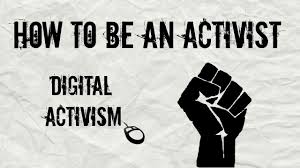
I knew what digital activism existed, but just did not know it was referred to as digital activism. To be honest, I found most platforms like that to be irritating because sometimes I felt like it caused more drama and arguments on social media than anything. Whenever I would see a political post I would scroll past it unless there were entertaining arguments in the comments. I have also never posted anything of the sort of digital activism specifically because I did not want to stir anything up. However, after reading the given articles on digital activism I agree that social media is one of the best ways to get certain issues or topics talked about and noticed on a wide scaled quickly.

These days almost everyone has some form or access to social media. Therefore it is a smart idea to use that as a platform. The activism is effective because they get a big audience rather quickly. It is also easy to share resources, tools, and ideas. Digital activism is more effective than television these days, and marches or protest only reach a specific area. People are constantly scrolling through their electronic devices so it is easily seen to many. One of the issues with digital activism is people are never too sure how credible something is because of the term, “never believe everything you read on the internet”. Also, if you are participating in the activism, it leaves you at risk online and offline against those who do not agree with you.

Just like with any use of the internet, the way you go about posting information or presenting things has to be done carefully. It is very easy for things to be misinterpreted on the internet. I found a lot of things interesting about this module. I read a lot of the biographies for the teens that participate in digital activism and it was really inspiring. It makes me want to do more personally but also makes me feel glad that there are people out there making a difference and doing well in the world. The ages ranged from late elementary kids to older teens/young adults. I think it is essential to get young kids informed about different topics and getting them involved. Everyone should also be informed on the appropriate and respectful ways to go about digital activism, because that is just as important as the act itself.

Photo Credit: https://www.google.com/search?hl=en&authuser=0&biw=1440&bih=757&tbm=isch&sa=1&ei=td8kXfvMKuXA5gK-wp-4Cw&q=digital+activism&oq=digital+activism&gs_l=img.3..0j0i8i30j0i24l8.3356.6078..6918…0.0..0.98.782.9……0….1..gws-wiz-img…….35i39j0i5i30.3Kl-KJzvPkM

Children and Technology

I feel that there are so many controversial opinions when it comes to whether technology is good or bad for children. I found the articles given on the topic were interesting and informational. After reading the material, I decided that just like with anything, technology is beneficial with the right amount of usage. I would be considered young for most, being twenty-one years old, and I feel that technology has significantly increased since I was even in elementary school. It is common to see young kids with several different types of smart/electronic devices these days. As a future parent and educator, it is essential that we monitor the technology use of our children and make sure they are using it in moderation.

Growing up, I did not have a phone until later middle school so that my parents could get ahold of me after sports practices and games. I did not get a smart phone until halfway through high school but only because my parents were getting one and it was cheaper for a family to all upgrade. My school got IPads for everyone partway through high school. I remember spending majority of my time outside regardless of the weather. My siblings, neighbors, and I would play every game you could think of, and even ones we made up outside. On Sunday’s it was our churches day of rest, which meant no going outside to play and we used to try everything to get to go outside. As a kid I did play some video games and watch TV of course, but I did do more things outside than in. As a future parent and teacher, I want to encourage that more than the other.

It is crazy to see how our technology has become more incorporated into our children’s lives. When I did observation at the elementary schools most classrooms had at least some IPads or mini laptops. Most students have some form of phone, tablet, video game, or ETC. I think it is essential that we encourage our kids to play outside. Studies show that children that spend too much time looking at a screen suffer from things like headaches or obesity. Technology for children can be a great resource or tool for learning but can be detrimental if used excessively. We do not need to ban technology from children, but we do need to have some type of balance.

Teens and Social Media

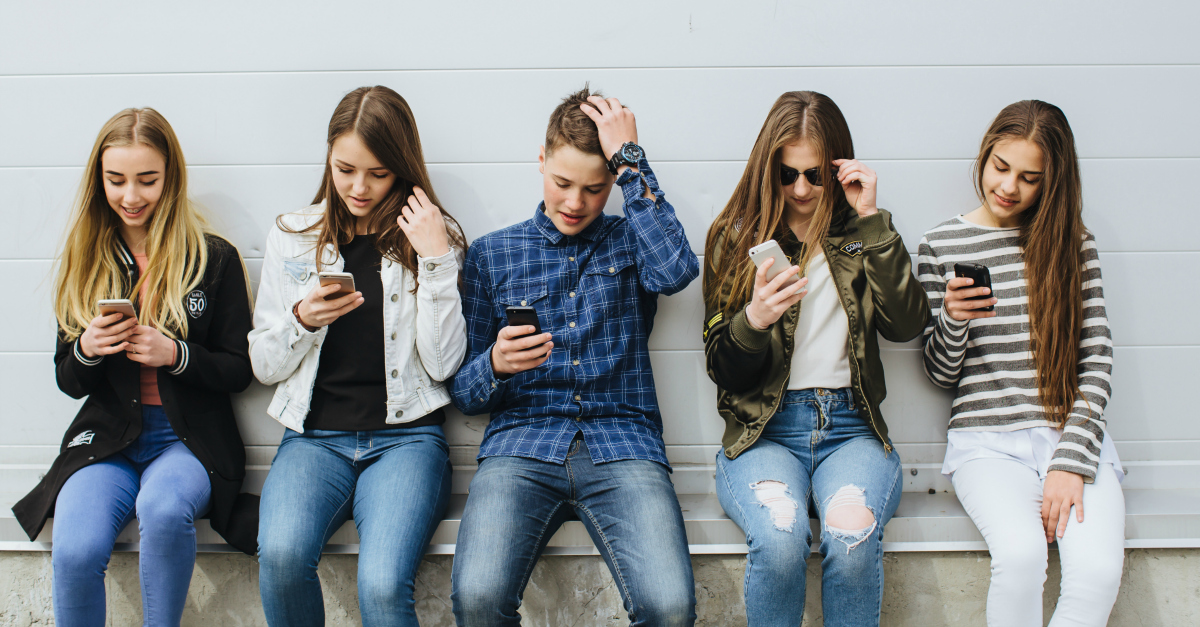
Social media has become more relevant in the last decade and just keeps getting more popular. There are very few teens or young adults that do not have at least one type of social media account. Almost everyone is guilty spending more time than they should on social media. Just like with everything else, there are pros and cons to the world of social media. For example, it can be a great place to update family members near and far on exciting news or accomplishments. It’s a great place to keep in touch with those you do not see every day. However, with all the great tools that social media provides, there are also serious downfalls and teens seem to suffer the most from those.

I can remember signing up for my first social media account in elementary school. With our emails, we could MSN messenger each other, which we did all the time. Then in middle school I got MySpace along with my friends, then Facebook, then Twitter, Snapchat, and Instagram in high school. We all get on social media initially with good intentions, however sometimes that is not always how it ends. In every single form of social media I have been a part of, I have witnessed some form of cyber bullying. There have been times where I stepped in and a lot of times where I have not. I personally feel that majority of the reasons so many teens and young adults suffer in the form of depression, anxiety, of self-esteem is due to social media.

It is sad that so many people care what they post and how people perceive to an unhealthy extent. It has also made teens addicted to their phone in a way that leaves them with separation anxiety to be apart from their phone and in constant contact with their friends. I will be honest, I definitely do not like going places without my phone, but I do more scrolling than posting on social media. Social media and technology can be great tools for teens but if they are not taught how to appropriately and responsibly use social media then they should not be using it period. It is not okay for people to hide behind a screen and bully others, or bully in general. Teens need to know that what they post on social media affects them and others and they do not need to try and look or be like someone they are not.

Photo Credit: parentingteensandtweens.com

Digital Citizenship

The internet is a big and complex thing and those that use it need to be careful how they use it or it could result in issues. Digital citizenship is something that should be discussed and taught to every child and be taken very seriously. In our world today almost every person has some type of technology and is on some form of social media. New apps and trends come out almost daily and children or young adults need to be aware that their actions online do matter and do have an effect. Digital citizenship is such a broad concept but boils down to one thing; to be appropriate and use technology appropriately. As a future educator, I want to enforce this in my personal life and classroom.

The internet can be used in for many great things and help provide learning in ways we cannot provide in just a normal classroom setting. However, if used incorrectly and abused, the internet can be a scary thing. Digital citizenship has about nine different elements, depending on who you talk to or what website you go to. Anyways, the nine elements are digital access, digital commerce, digital communication, digital literacy, digital etiquette, digital law, digital rights and responsibilities, digital health, and digital security. All of these elements are important and tie in to how to have good digital citizenship. For children it is essential to get across the point that they need to be aware of what they post or watch because it could be harmful to them or to others.

My biggest concern when I was researching digital citizenship, and thinking like a future teacher, was cyber bullying. Trying to prevent bullying in the classroom or at school in the halls or on the playground is hard enough and now we have to worry about what goes on online and outside of school. Children do not realize the harm their words do to each other or what their posts makes them look like. It is also important that they do not get themselves into trouble or scary situations. I feel that as a parent and a teacher, social media is going to be on the top of my list for things that I am always going to worry about. Most of us know what it feels like to be on the other end of a mean comment or message and if by teaching children about digital citizenship can help that, then I will.

Video Credits: https://youtu.be/mbbuLFUSd0A